K-12 Field Trips
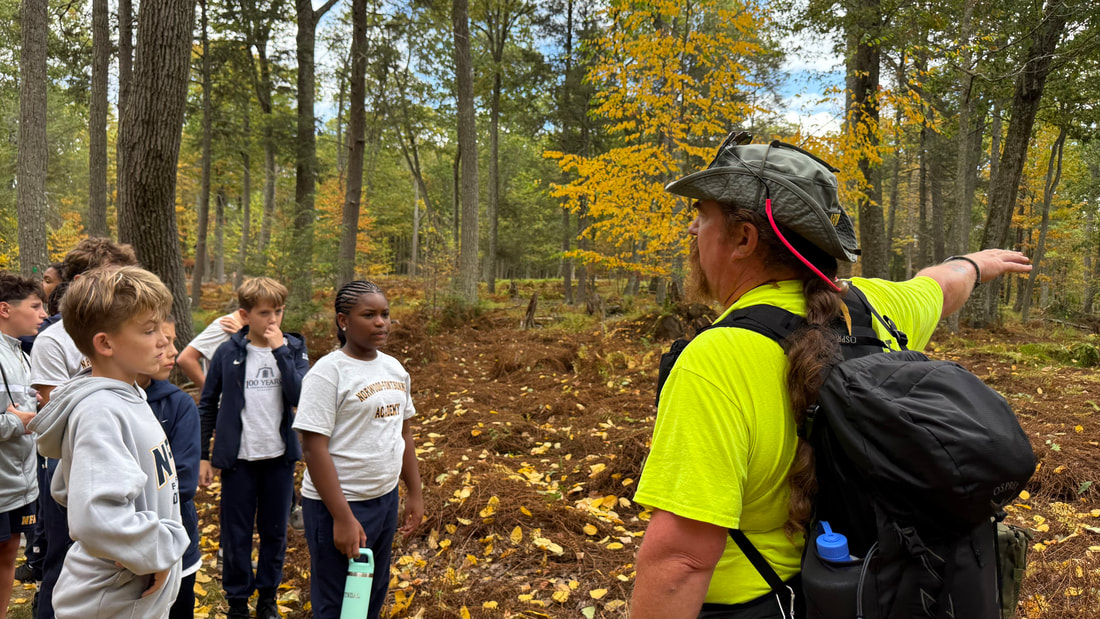
At Lacawac, our field trips offer students a fun and engaging nature-based learning experience where curiosity leads the way. Our programs combine environmental education and STEM concepts with exploration, giving students the chance to discover, investigate, and connect with the natural world. Led by our expert environmental educators, students of all backgrounds and abilities will engage with standards-aligned programs designed to meet educational goals. Students will explore Lacawac’s 550-acre preserve, visiting diverse habitats including forests, wetlands, a pristine glacial lake, ponds, and on-site laboratories and classrooms, all while uncovering key environmental concepts along the way.
Field Trip PricingLacawac’s field trip prices are based on class sizes of 30 students, with an additional $2 fee per student beyond this number (please note: teachers and chaperones attend free of charge). Program-specific prices can be found below alongside each field trip description.
Discounts
Scholarships Lacawac Sanctuary Foundation is committed to making environmental education accessible to all. We offer scholarships to help schools and groups participate in our field trips and programs. To learn more and apply, please contact us at [email protected]. Program CustomizationOur field trips can be tailored to meet the specific needs and grade levels of your students. Contact us at [email protected] to discuss modifications and ensure the program is the right fit for your class. |
Schedule a Field Trip
Scheduling your program with Lacawac is easy! Start by exploring our selection of programs to find the experience that best fits your students’ goals and needs. Once you’ve chosen a program, complete our Program Request Form to begin the scheduling process. We recommend scheduling your program in advance to ensure availability. Once we receive your form, our team will connect with you to confirm details, check availability, and support you every step of the way.
Weather & Cancellation PoliciesAs an outdoor education facility, Lacawac closely monitors weather conditions, with student safety being our top priority. Lacawac’s programs run rain or shine; however, in the event of unsafe weather conditions, staff will determine if a program can safely operate and will notify schools of cancellations by 7:30 on the day of the program. In the event that a program is canceled due to weather, we will work with schools to reschedule within the same calendar year. All other cancellations or rescheduling requests must be submitted in writing at least three weeks prior to the scheduled program date. Please note that Lacawac cannot provide refunds for canceled programs. |
Explore Our Field Trips
Sense of Wonder
Grades PreK-K | 2 Hours | $125 per class of up to 30
Students will use their senses to explore Lacawac’s living classroom. Activities include looking for shapes and colors, listening to forest sounds, and feeling natural textures. This program nurtures curiosity and helps build an early appreciation for nature.
PA Learning Standards for Early Childhood: 3.3 PK.A.7, 3.2 PK.B.5, 4.1. PK.A, 4.2 PK.C
Life Cycles
Grades K-1 | 2 Hours | $125 per class of up to 30
Students will explore the forest to observe how plants and animals change as they grow, looking for nymphs, larvae, seedlings, and other signs of different life stages, gaining a clearer understanding of development and how the seasons shape these changes.
STEELS Standards: 3.1.K.A, 3.1.2.C, 3.1.3.A
Amazing Adaptations
Grades 1-2 | 2 Hours | $125 per class of up to 30
Through hands-on activities, students will explore the traits animals use to survive in their habitats. They’ll learn how structure and movement help living things meet their needs and how nonliving elements influence survival. Students will play an interactive predator–prey game that highlights the importance of camouflage and other adaptations found in the forest.
STEELS Standards: 3.1.K.A, 3.1.2.C, 3.1.3.G
Nature Detectives
Grades 2-3 | 2 Hours | $125 per class of up to 30
Students will search for clues to uncover the signs animals leave behind. This interactive excursion emphasizes critical thinking and problem-solving as students collect and classify plants and animals based on their characteristics. Through inquiry and exploration, students will deepen their understanding of biodiversity and the habitat needs of different species.
STEELS Standards: 3.3.K.C, 3.1.3.F, 3.1.3.G
Watershed Connections
Grades 4-8 | 3 Hours | $175 per class of up to 30
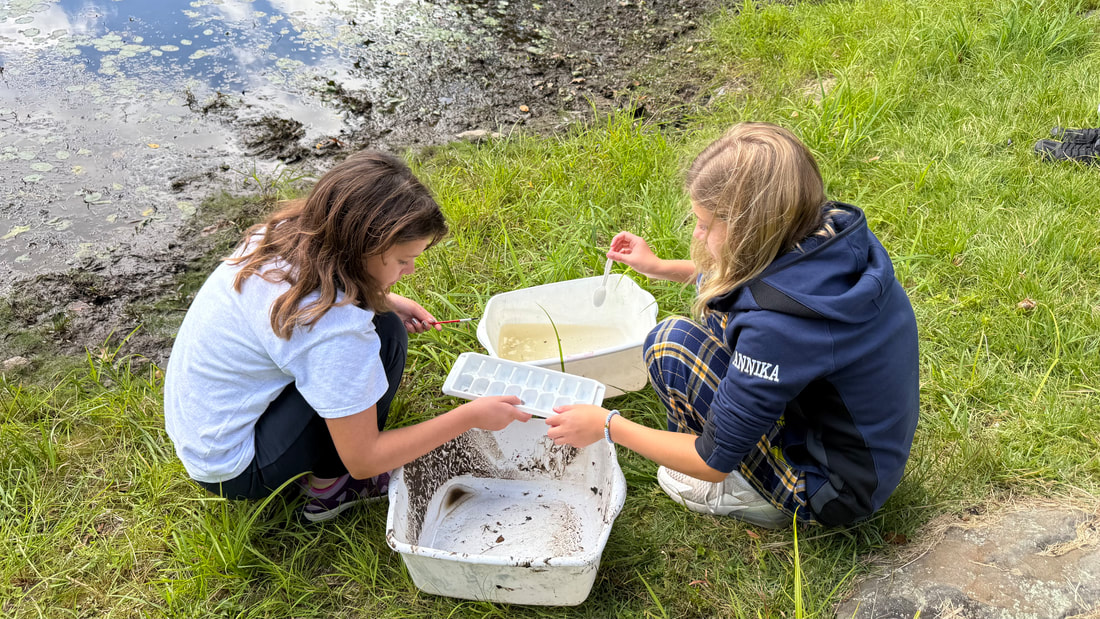
Using dips nets, students will collect and sort aquatic macroinvertebrates from a lentic ecosystem. During a lab station students identify organisms to determine water quality. A walk through the watershed will give students an opportunity to interact with wetlands and a forest ecosystem to determine how land use affects runoff, infiltration, and water quality. Students identify the boundaries of the Lacawac watershed using a topographic map. Data collected during the trip will be used to make conclusions about the role humans play in maintaining a healthy water supply.
STEELS Standards: 3.3.4.C, 3.4.6-8.C, 3.4.6-8.E
Forest Ecology
Grades 6-8 | 3 Hours | $175 per class of up to 30
Students will use a dichotomous key to identify trees in our woods. They will compare plant diversity inside and outside of a deer exclosure and use scientific methods to measure vegetation cover in the canopy in the canopy and forest floor to determine the impact of deer populations. Through data collection and analysis, students will explore the relationship between deer populations, ground cover, and canopy structure, making predictions about how these factors influence forest ecology.
STEELS Standards: 3.1.6-8.I, 3.1.6-8.J, 3.1.6-8.L
Advanced Forest Ecology
Grades 9-12 | 3 Hours | $175 per class of up to 30
Students will observe current scientific research being conducted in a terrestrial ecosystem. They will compare plant diversity inside and outside a deer exclosure and use scientific methods to measure vegetation cover in both the canopy and the forest floor to determine the impact of deer populations. Using statistical analysis of the data they collected, students will examine the relationships between deer populations, ground cover, and canopy structure, making predictions about how these factors influence the overall health of the forest.
STEELS Standards: 3.1.6-8.I, 3.1.6-8.J, 3.1.6-8.L, 3.1.9-12.I, 3.1.9-12.L
Advanced Water Ecology I
Grades 9-12 | 3 Hours | $175 per class of up to 30
Students will use scientific equipment to collect aquatic samples from Lake Lacawac while on rowboats. They will work alongside one of Lacawac’s lake scientists, who collaborates with international researchers, to analyze the collected data. Students will compare the biological and physical properties of Lake Lacawac and Heron Pond, exploring how different factors influence freshwater ecosystems. Throughout the program, the importance of STEM degrees and careers is emphasized, providing insight into real-world scientific research.
STEELS Standards: 3.1.6-8.I, 3.1.9-12.L, 3.4.6-8.E, 3.4.9-12.D
Advanced Water Ecology II: Making Connections Through Inquiry
Grades 9-12 | 3 Hours | $300 per class of up to 30
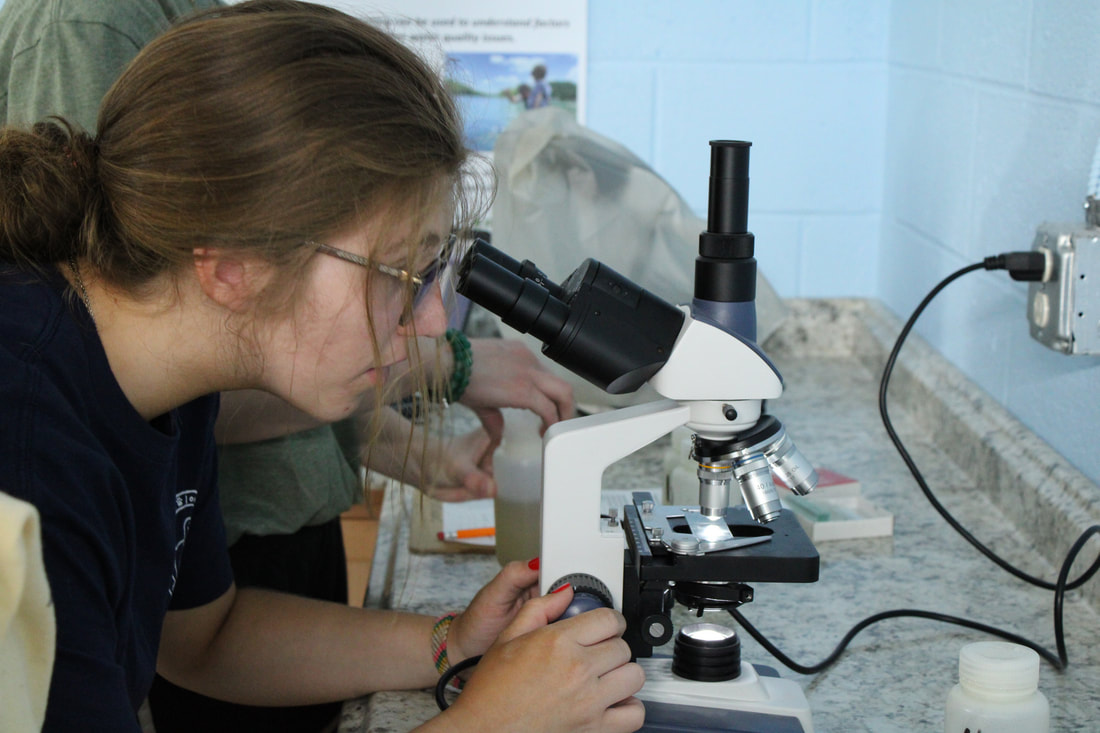
The impacts of water quality on the aquatic ecosystem is explored through scientific literature and research currently being conducted on Lake Lacawac. Students analyze data and test water samples brought to the classroom. Students investigate chemical and sensor parameters, as well as biological parameters such as macroinvertebrates and plankton. All background information and equipment are supplied. Students are guided through the inquiry process to develop a question and design a field investigation. At Lacawac, student teams perform their investigation, analyze the collected data, and share their findings. Lacawac’s PLEON lake scientist will present a lake ecology analysis and assist students in data analysis. This program consists of 2 classroom visits and a field trip to Lacawac Sanctuary.
STEELS Standards: 3.1.9-12.L, 3.4.9-12.D, 3.4.9-12.E